Before someone comes home from the hospital, agree on how they will reach the bathroom, use the toilet and bathe. Ask the care team what help and equipment they need. Then check the room against that plan.[1][2][4] If building work will not be finished in time, tell the discharge team and ask for a plan that works until it is done.
Use the bathroom homecoming worksheet below to put the answers in one place. It separates care instructions, equipment, help at home and building work so each person knows what they need to arrange.
Get these answers before homecoming
Ask the nurse or discharge planner about the tasks the person will do at home. The CMS discharge checklist calls out bathing, using the bathroom, climbing stairs, equipment and caregiver support.[4] Write down:
- What can the person do alone, and which tasks need help?
- Are there limits on bathing, standing or using stairs?
- Which equipment is recommended, who will arrange it, and when will it arrive?
- Who will show the person and caregiver how to use it?
- Who should the family call if the home setup does not match the plan?
Share the answers with the people helping at home. Ask the staff to explain any instructions you do not understand before discharge.[2][4]
Check the whole route, not just the shower
Start where the person will sleep or spend most of the day. MedlinePlus recommends having a bathroom or portable commode on that floor.[1] If stairs stand between the person and the only bathroom, raise that with the discharge team before making a home plan.
Clear loose rugs and cords from the route. Check the lights for night trips, keep the bathroom floor dry, and put soap and towels within easy reach.[1] A towel rack cannot take the place of a grab bar.[1][3]
Record these room details for the care team and installer:
- Door and approach: Note the clear doorway opening, door swing, tight turns and changes in floor height. Ask whether they work with the recommended walking aid and help.
- Toilet: Note the seat height, approach space and where support is needed to sit or stand.
- Bathing area: Note the tub wall or shower step, where controls can be reached and room for the recommended seat or helper.
- Calling for help: Agree on how the person will reach a phone or call a caregiver.[1][2]
These notes help describe the room; they are not a test of what the person can safely do. If the right changes are unclear, ask for an occupational or physical therapist’s advice. MedlinePlus recommends a referral when someone needs help deciding which bathroom changes to make.[3] NextStep’s guide to working with an occupational therapist explains how that advice can guide building work.
Use a bathroom homecoming worksheet
Download the one-page bathroom homecoming worksheet (PDF)
Print the one-page worksheet and complete it with the people arranging the return home. Keep the completed copy private. Share only the room and work details an installer needs, rather than medical records.
| Part of the plan | What to record |
|---|---|
| Care-team instructions | Bathing limits, toilet use, stairs and the help needed. |
| Home route | Bathroom floor, doorway and turns, toilet approach and bathing entry. |
| Equipment | Recommended item, person arranging it, arrival date and who explains its use. |
| Help at home | Helper, tasks, times available and how to call for help. |
| Building work | Installer’s scope, written price, work dates and when the bathroom can be used. |
| If work is not finished | Care-team plan for bathing, toilet use, equipment and help until it is done. |
Add the expected return date and the date you last checked the plan. When a delivery or work date changes, use the same sheet to see what needs another call.
Separate the first-day plan from later building work
A shower conversion is not the first decision for every discharge. If bathing is restricted, ask the care team how washing should be handled now. If they recommend a seat, toilet aid or help from another person, arrange those parts of the plan while any building work is being assessed.[2][4]
For example, suppose the care team recommends a shower chair, but the family is unsure whether it fits through the shower entry. Record the chair details and room measurements, then ask the team or therapist about fit and use. Have the installer assess any proposed change to the room. Do not assume the equipment and a future conversion solve the same problem.
If work cannot finish before homecoming, tell the discharge planner what will be unavailable. Ask how bathing and toilet use will be handled, what equipment is needed and who will help. Get that plan settled with the care team rather than relying on an unconfirmed construction date.[2][4]
Ask Paul to assess the building work
For homes in Columbus and Central Ohio, NextStep handles small safety jobs as well as larger bathroom projects. Its services include grab bars, toilet changes, bathing conversions and full bathroom remodeling. The in-home estimate is free, with a written price for the proposed work.[5]
Bring your room notes, the expected homecoming date and the care team’s advice about the movements that need support. Ask Paul what the work involves, when it could start and when the bathroom would be usable. Confirm availability for your address and date when you call.
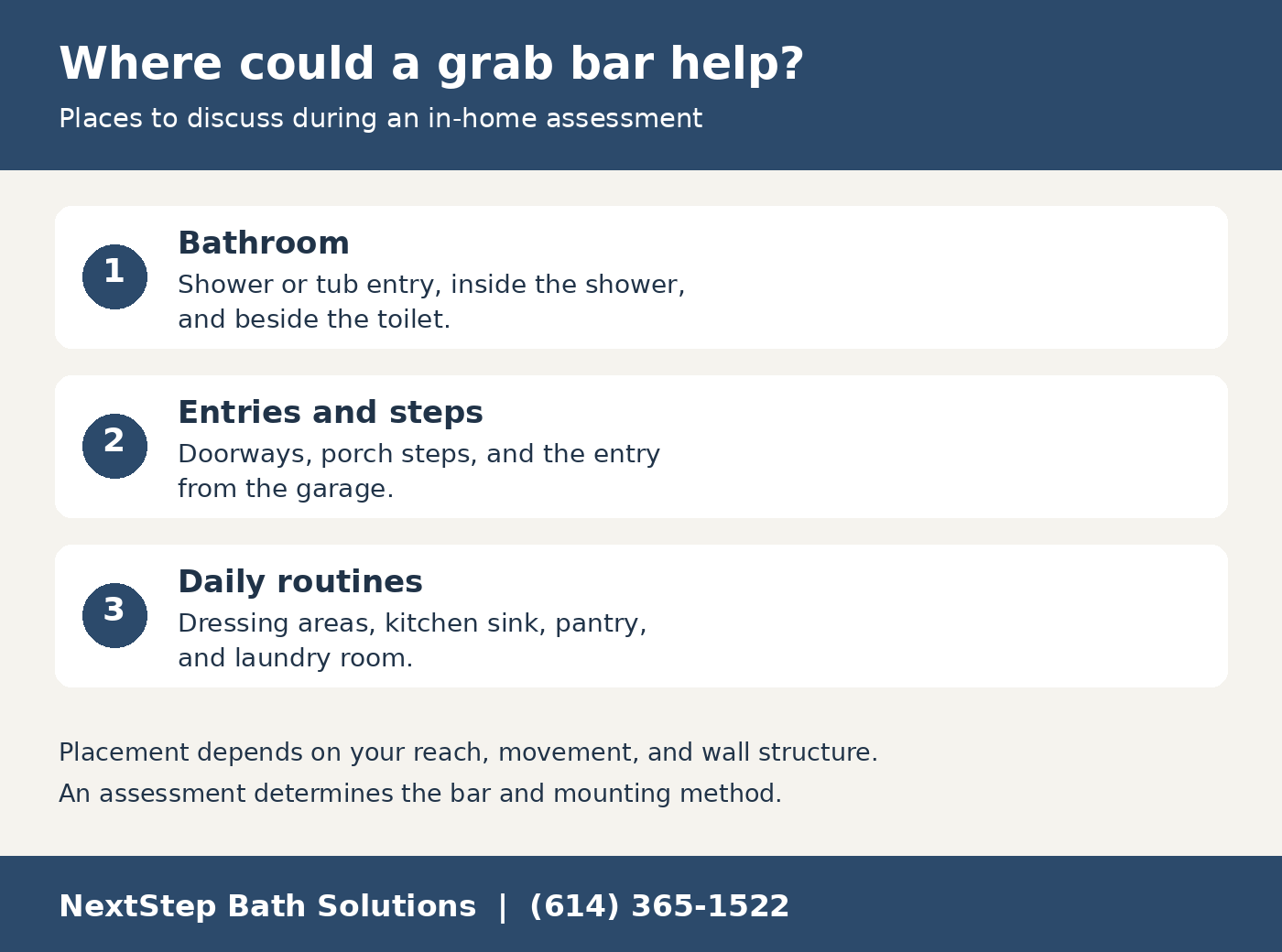
For placement questions, see where grab bars can help in a tub or shower. For the job options, see NextStep’s bathroom services.
Request a free in-home estimate with Paul or call (614) 365-1522.
Updated November 9, 2026. Prepared for NextStep Bath using the patient and caregiver guidance below. This is a home-planning resource, not a clinical assessment. Follow the person’s discharge instructions. The CMS checklist was revised in June 2015; it is used here for planning questions, not current insurance rules.