Choose the entry you need, then compare the material underfoot. A low curb describes the step into the shower; acrylic describes a finished surface. They are not competing categories. Manufacturers sell acrylic barrier-free bases as well as bases designed to receive tile.[4] Start your estimate conversation with the finished entry height, the base dimensions and the exact product or tiled assembly being proposed.
NextStep Bath Solutions provides bathroom remodeling and tub-to-shower conversions in Columbus and Central Ohio. Use these questions to compare the work proposed for your bathroom.
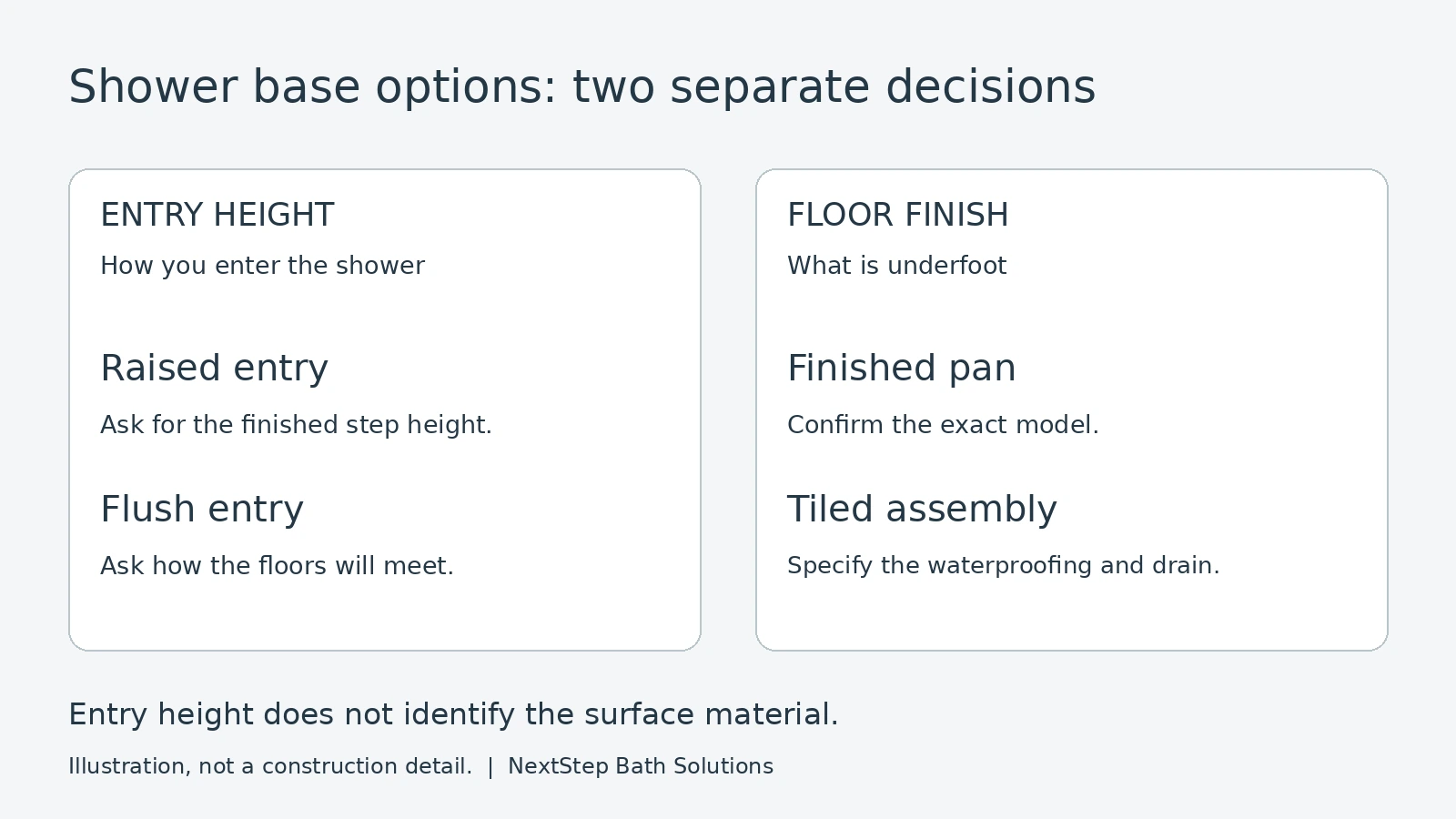
Separate the entry from the surface
A low-threshold shower has a raised lip. A zero-threshold entry meets the bathroom floor flush.[7] Neither term, by itself, tells you what the shower floor is made of.
Ask for the finished height measured from the bathroom floor. Do not approve an entry based only on a label such as "easy access" or "barrier-free." If someone uses a walker or shower chair, explain how they enter and bathe before discussing finishes.
For the fuller entry comparison, read our guide to low-threshold versus zero-threshold showers. This article focuses on choosing the base and comparing what belongs in the estimate.
Acrylic: check the actual base, not just the material name
A finished acrylic pan is different from a tile-ready pan. Freedom Showers, for example, says its finished acrylic and fiberglass bases should not be tiled over; it directs buyers who want a tiled floor to its tile-over pans or level-entry kit.[4]
Before choosing a finished base, ask to see:
- The model number and dimensional drawing.
- The drain location and how it fits the proposed layout.
- The finished entry height, including any transition outside the shower.
- The required support beneath the pan.
- The cleaning instructions and written warranty.
Pay attention to what the dimensions measure. Freedom lists outside dimensions as the framing-pocket size its bases fit, rather than describing those numbers as usable standing space.[4] Ask for both the installation footprint and the room you will have inside.
Cleaning instructions deserve a look before purchase, too. Kohler's acrylic-base care guidance calls for wiping the receptor with a soft cloth or squeegee after use and avoiding abrasive cleaners.[13] Follow the instructions for the model you select rather than assuming a cleaner suitable for tile is suitable for acrylic.
Tile: compare the assembly beneath the finish
With a tiled floor, ask the contractor to identify the base, waterproofing and drain connection as well as the visible tile. Schluter states that tile is not inherently waterproof and needs a waterproofing system that protects the materials beneath it.[9]
A tiled base can use a prefabricated tray or a mortar bed; Schluter describes its mortar-bed option as a way to build a custom shape and accommodate an offset drain.[9] That makes a tiled assembly worth discussing when the proposed layout does not suit an available finished pan.
For a tile proposal, request the planned assembly in writing. Ask which tile is suitable for that shower floor, how the floor will meet the drain, how the waterproofing will be checked, and what cleaning each finish requires. Do not settle for a tile sample as the whole specification.
A flush entry needs a floor plan
Schluter describes recessing the shower floor so a sloped mortar bed or prefabricated tray can finish flush with the bathroom floor.[10] Its guidance also explains alternatives involving a ramp or a raised bathroom floor, and warns that the bathroom needs protection against water and moisture beyond a clearly defined shower area.[10]
Ask the installer to show the proposed transition and explain any work outside the shower footprint. If the bathroom floor must change, have that work included in the estimate before choosing the base.
Keep the conversation specific to the person using the shower. A product name alone should not decide whether the opening, floor and bathing arrangement will work for them.
Compare written scopes before comparing prices
Use the same questions for each proposal:
- Which base or tiled assembly is included?
- What will the entry look like after the bathroom flooring is finished?
- Does the price include floor preparation, drain work and waterproofing connections?
- What work outside the shower is included or excluded?
- Who covers installation issues, and what does the product warranty cover?
Do not assume that an acrylic option is always the least expensive finished job or that tile automatically makes the better shower. Ask for a written comparison using the same layout and scope. This guide does not assign a universal price or lifespan to either material.
If you are replacing a bathtub, see NextStep's tub-to-shower conversion service for the overall project. NextStep also offers full bathroom remodeling when the planned work extends beyond the wet area.[6] Confirm the available products and project scope with Paul rather than treating the manufacturers mentioned here as NextStep's supplier list.
Compare the options for your bathroom
Discuss the entry, base and installation scope with Paul. NextStep serves Columbus and Central Ohio.
Sources
Source information reviewed September 21, 2026. Manufacturer examples do not establish NextStep product availability.