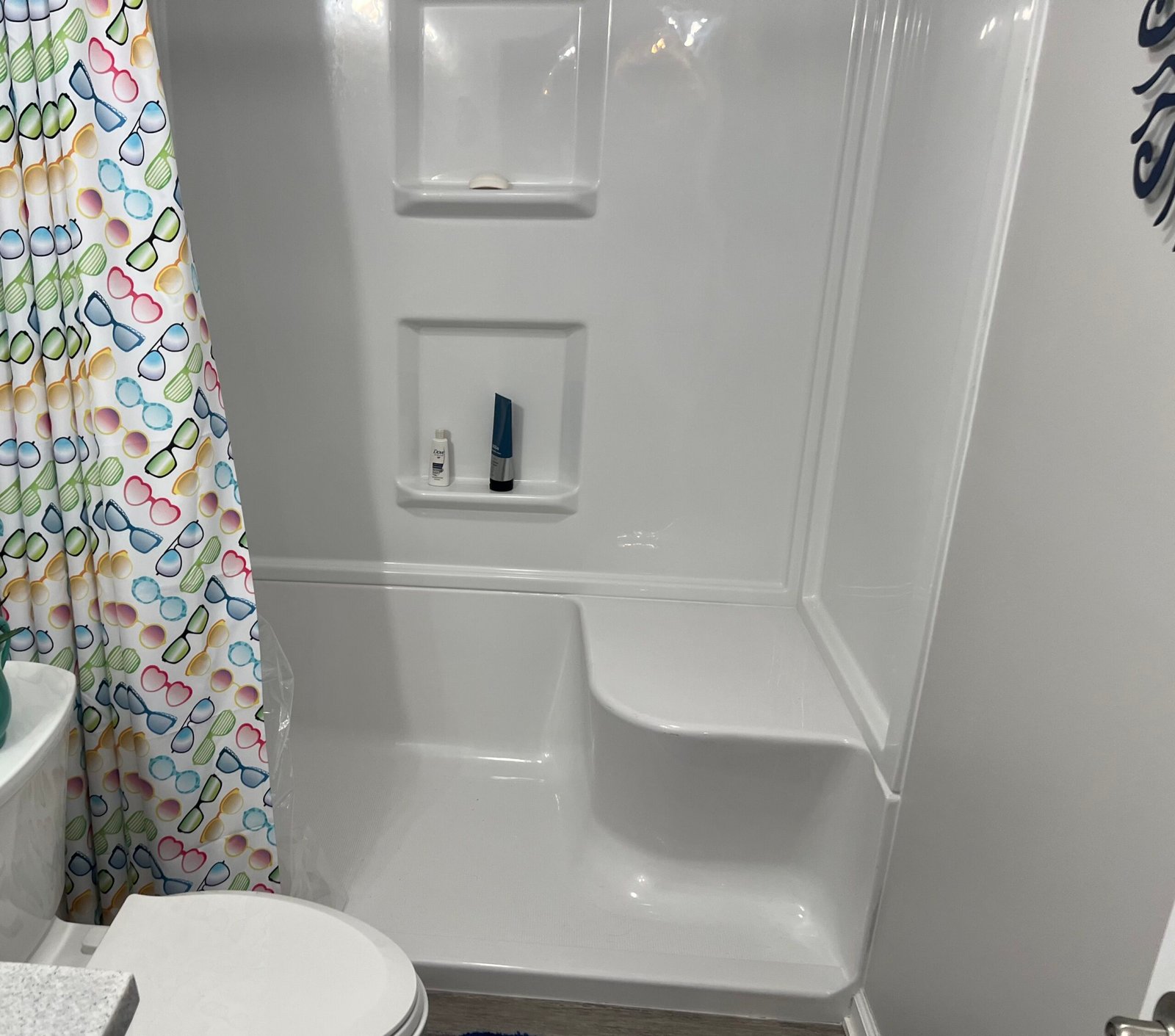
Place a handheld showerhead where the person using the shower can lift it out of its holder and put it back from their normal bathing position. Plan the holder, seat, and controls together. An adjustable bar helps only if the showerhead is left within reach; the U.S. Access Board specifically warns that a high parking position can make an adjustable unit inaccessible.[9]
Before choosing a mounting spot, decide whether the shower needs to work for someone standing, someone seated, or both. Use the questions below to review the layout before installation. They are planning suggestions, not a description of a completed NextStep project.
Start with the seat, not the old showerhead height
If someone will shower seated, make the seat location part of the placement discussion from the beginning. Ask the installer to show where the holder would sit relative to that position.
Review the whole sequence:
- Can the person reach the showerhead while it is still in its holder?
- Can they remove it and put it back without standing up?
- Can they operate the water controls and any diverter that switches between showerheads?
- Does a door, shelf, or grab bar get in the way?
- Where will the showerhead be left after someone taller uses it?
The Access Board’s guidance places both shower controls and diverters within specified accessible locations, and says enclosures cannot obstruct controls or shower spray units.[9] That is a useful distinction when comparing layouts: being able to hold the sprayer does not answer whether you can turn it on.
For a larger change, NextStep’s tub-to-shower conversion service describes an adjustable handheld showerhead alongside seating and grab bars.[6] Review those components as one layout rather than choosing each in isolation.
A slide bar offers adjustment, but check the actual holder
A slide bar lets the handheld showerhead move along a vertical rail. Moen describes its slide-bar systems as having an adjustable holder and a flexible hose.[2]
Ask to see how the selected holder releases and locks. Try the adjustment mechanism before choosing it, especially if gripping or turning small parts is difficult. Include everyone who regularly uses the shower in that decision.
Keep two positions in mind: where the spray feels comfortable during use and where the showerhead should rest afterward. The Access Board recommends returning adjustable shower spray units to a lower position so they remain within accessible reach for other users.[9]
What the 48-inch measurement means
In its guidance to the ADA Standards, the U.S. Access Board says the hand-held unit must be reachable within 48 inches above the shower floor, measured to the operable portion.[9] It also allows an adjustable vertical bar to extend higher, provided the unit can be positioned within the required location and reach limit.[9]
That measurement concerns the reachable part of the unit, not simply the top of the rail. It also does not replace the layout-specific requirements for shower controls.[9]
Use this as an accessibility reference, not a declaration that a particular home or product is ADA compliant. Ask the installer which requirements apply to your project and what placement fits the person who will use it. This article does not determine code compliance for an individual bathroom.
Leave room for grab bars and the hose
The Access Board says a vertical shower bar cannot obstruct a grab bar; its guidance also addresses the clearance between those fittings.[9] Keep the hand shower and its hose out of the way of the support you need to use.
Do not assume a shower rail is a grab bar. Ask for the exact product documentation before treating it as support. Moen’s product guide identifies specific combination grab-bar/slide-bar models separately from other slide-bar models.[2] Appearance alone is not a reason to lean on a fixture.
If support is part of the project, review grab-bar installation alongside the showerhead layout.
Ask the installer to check the proposed hose with the selected seat and holder positions. Can it reach the intended washing area without being pulled tight? Where does it hang when the showerhead is parked? Does it cross the entrance or interfere with a door? Check the actual hose and fittings rather than selecting them from a photograph.
Bring these questions to the estimate
Tell Paul who uses the shower, whether anyone needs to sit, and what is hard to reach now. If you already use a shower chair or have a written recommendation for the bathroom layout, have that information available.
Ask the estimate to identify the proposed showerhead and holder, the planned mounting location, and whether any plumbing changes are included. Do not approve a placement from a height measurement alone. Review how you would reach the holder, operate the water, and return the sprayer.
NextStep offers free in-home estimates with Paul in Columbus and surrounding Central Ohio communities.[8] Schedule a free in-home estimate with Paul to discuss the layout for your bathroom.
Sources
Sources reviewed September 30, 2026.