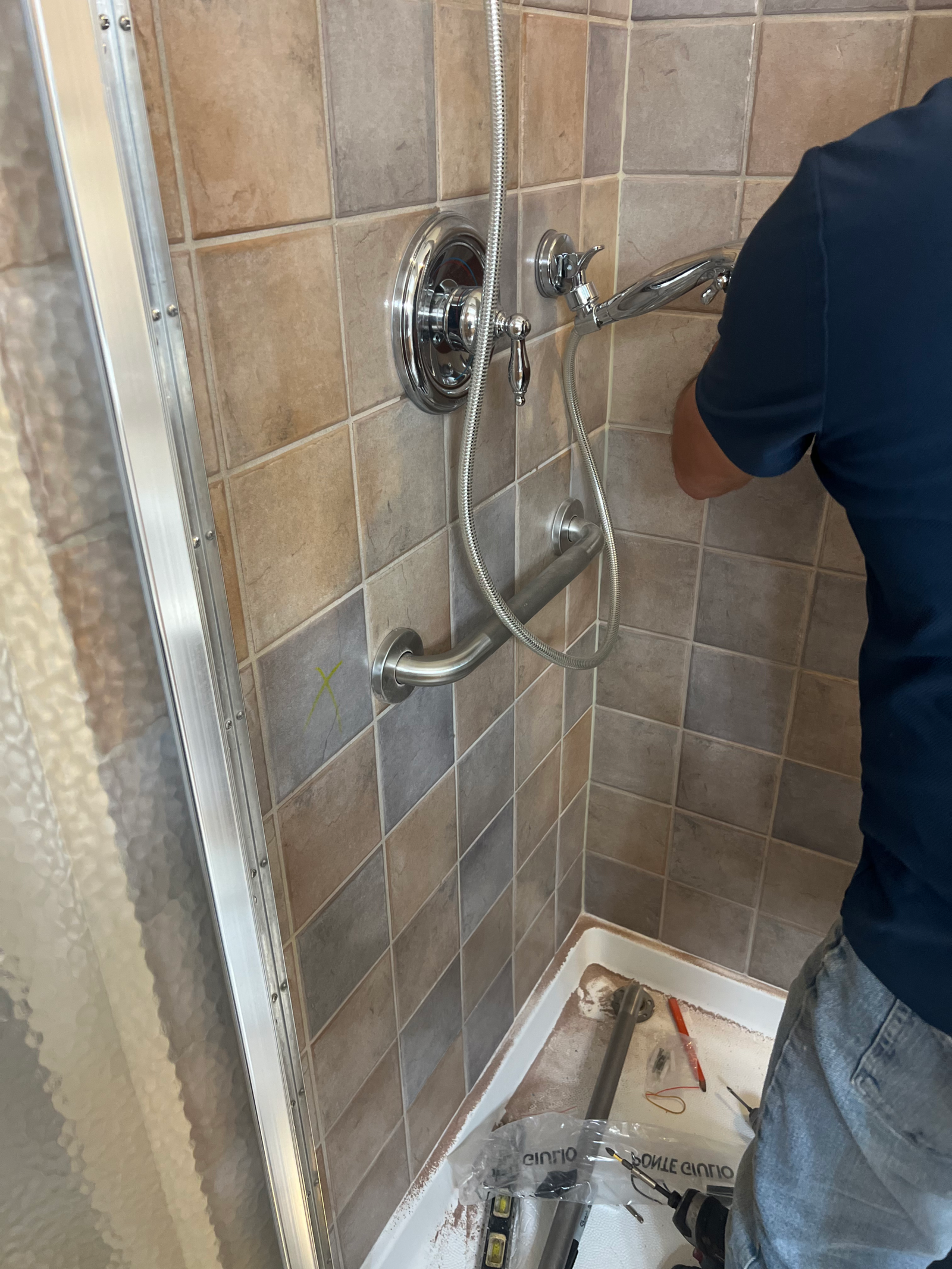
Original Medicare generally does not pay for permanently installed grab bars, walk-in tubs, tub-to-shower conversions, or bathroom remodeling. Medicare Part B covers medically necessary durable medical equipment prescribed for use at home, but CMS classifies bathtub lifts and bathtub seats as noncovered convenience or hygienic items.[1][7] Some Medicare Advantage plans offer supplemental home-safety benefits that can include grab bars, ramps, or stair rails. Coverage depends on the exact plan and year.[3][6]
First, find out which Medicare you have
Original Medicare and Medicare Advantage do not handle extra home-safety benefits the same way. Original Medicare includes Parts A and B. Medicare Advantage is a private plan approved by Medicare that includes Part A and Part B and may offer benefits Original Medicare does not.[6]
That distinction decides which call to make:
- With Original Medicare, start with Medicare’s durable medical equipment rules.
- With Medicare Advantage, read the plan’s Evidence of Coverage and call the plan directly.
- With Medicaid, a waiver program, the VA, or a local aging program, use that program’s rules rather than assuming Medicare’s answer applies.
What Original Medicare usually covers
Medicare Part B can cover durable medical equipment when a doctor or other qualified provider prescribes it for use in the home. The supplier must also be enrolled in Medicare.[1]
Covered DME is equipment such as certain walkers, wheelchairs, hospital beds, and commode chairs when the medical and coverage requirements are met. A permanent bathroom renovation does not become DME just because it helps someone bathe more safely.
CMS’s national DME reference list is especially direct about related bathing equipment. It says bathtub lifts are denied as convenience items and bathtub seats are denied as comfort, convenience, or hygienic equipment because they are not primarily medical in nature.[7]
| Bathroom item | Original Medicare starting point | What to verify |
|---|---|---|
| Permanently installed grab bars | Generally not covered as standard DME | Whether another program or an Advantage plan offers a home-safety benefit |
| Walk-in tub | Generally not covered | Never rely on a salesperson’s promise. Ask Medicare or the plan in writing |
| Tub-to-shower conversion | Generally not covered | Treat it as remodeling unless the plan confirms a specific benefit |
| Shower chair or transfer equipment | Item-specific | Ask whether the exact product qualifies as DME and whether the supplier is enrolled |
| Commode chair | May be covered in limited medical circumstances | Prescription, medical necessity, confinement criteria, and enrolled supplier |
Medicare Advantage can be different
CMS says Medicare Advantage plans may offer supplemental benefits that Original Medicare does not. Its own beneficiary material gives home modifications such as wheelchair ramps, stair rails, and grab bars as examples.[3]
That does not mean every Medicare Advantage plan pays for bathroom work. Plans set their own supplemental benefits, limits, approved items, networks, and authorization rules. Medicare tells beneficiaries to check the plan’s Evidence of Coverage for supplemental benefits and cost sharing.[1]
A plan may cover a specific grab bar and installation while excluding a full shower conversion. It may require a clinician’s recommendation, prior authorization, an approved vendor, or a fixed allowance. It may also change the benefit the next plan year.
Get the answer before ordering materials or signing a remodeling contract.
Ask the plan these seven questions
Call the member-services number on the insurance card. Use the phrase “supplemental home-safety or home-modification benefit,” then ask:
- Does my current plan cover grab bars, walk-in tubs, or shower-entry modifications?
- Is the benefit available to every member or only members who meet medical or chronic-condition rules?
- Do I need a doctor’s order, occupational-therapy assessment, or prior authorization?
- Is there an annual dollar limit, copay, or approved-product list?
- Must I use an in-network supplier or installer?
- Does the plan pay the contractor directly, reimburse me, or provide an allowance?
- Can you send the coverage terms and authorization in writing?
Write down the representative’s name, call date, reference number, and the section of the Evidence of Coverage they used. A verbal “it should be covered” is not enough.
Medicare’s Plan Compare tool can help identify plan benefits, but the plan’s current documents and written authorization control the actual claim.[6]
A doctor’s note helps only when the benefit exists
A doctor’s order can establish medical need. It cannot create a benefit that Medicare or the plan does not offer.
For Original Medicare DME, the order, equipment category, supplier enrollment, and coverage rules all matter.[1] For a Medicare Advantage supplemental benefit, the plan may ask for a clinician’s recommendation or home-safety assessment. Ask first. Do not schedule the remodel and try to justify it afterward.
An occupational therapist can also help identify the movement that is failing: stepping over the tub wall, reaching controls, transferring to a seat, standing balance, or caregiver access. That assessment can improve the design even when the construction remains self-pay.
If Medicare says no, check other programs
A Medicare denial does not end the search. The Central Ohio Area Agency on Aging publishes a housing and home-repair guide with local programs and eligibility details. The guide makes clear that income criteria and program limits apply.[11]
Other possible routes include Medicaid waiver programs, county senior services, veterans’ benefits, nonprofit home-repair programs, and local housing grants. Each uses its own eligibility rules. Ask whether the program must approve the work before construction begins.
Do not let a coverage promise drive the bathroom design
Insurance is one constraint. The person and the room still decide the work.
A grab bar has to be placed where it supports the actual transfer and anchored to structure that can carry the load. A lower shower entry may solve the main problem without requiring a walk-in tub. A walk-in tub may fit someone who wants to keep soaking, but it also requires sitting inside while the tub fills and drains.
Start with the movement that is difficult. Then compare the safest practical design, the benefit rules, and the out-of-pocket cost.
NextStep can measure the bathroom and explain the construction choices. NextStep does not decide Medicare coverage and will not promise that an insurer will reimburse the project.
For the construction side, review NextStep’s grab bar installation, walk-in tub installation, and tub-to-shower conversion services.
Frequently asked questions
Does Original Medicare pay for grab bars?
Original Medicare generally does not pay for permanently installed grab bars. CMS lists bathtub lifts and bathtub seats as noncovered convenience or hygienic items, and its DME rules focus on prescribed medical equipment for home use. Some Medicare Advantage plans may offer grab bars as a supplemental benefit, so check the plan’s Evidence of Coverage before buying.
Does Medicare pay for a walk-in tub?
Do not expect Original Medicare to pay for a walk-in tub. A walk-in tub is a permanent bathroom fixture, not a standard covered DME item. A Medicare Advantage plan could have a home-safety allowance, but the plan must confirm whether a tub, installation, and contractor are eligible.
Does Medicare pay for a tub-to-shower conversion?
Original Medicare generally does not cover a tub-to-shower conversion or bathroom remodel. Ask a Medicare Advantage plan whether it offers a home-modification benefit and whether a shower conversion qualifies before signing a contract.
Can a doctor’s prescription make Medicare cover the remodel?
A prescription can be required for covered durable medical equipment, but it does not automatically convert a permanent bathroom fixture or remodeling project into covered DME. The item still has to meet Medicare’s coverage rules.
How do I check a Medicare Advantage bathroom-safety benefit?
Call the number on the plan card and ask for the supplemental home-safety or home-modification benefit. Request the Evidence of Coverage, the dollar limit, eligible items, prior-authorization rules, approved suppliers, installer requirements, and written confirmation before work begins.
Talk through the bathroom before buying
If you want to know what can physically work in the room, schedule a free in-home estimate with Paul. Bring the plan’s written benefit terms if you have them. Paul can scope the construction. Your insurer or program administrator must confirm coverage.
Sources
- Medicare.gov, Medicare Coverage of Durable Medical Equipment and Other Devices, accessed August 27, 2026.
- CMS, New Medicare Advantage Supplemental Benefits, accessed August 27, 2026.
- Medicare.gov, Understanding Medicare Advantage Plans, accessed August 27, 2026.
- CMS, Durable Medical Equipment Reference List, accessed August 27, 2026.
- Central Ohio Area Agency on Aging, Housing and Home Repair Guide, accessed August 27, 2026.